

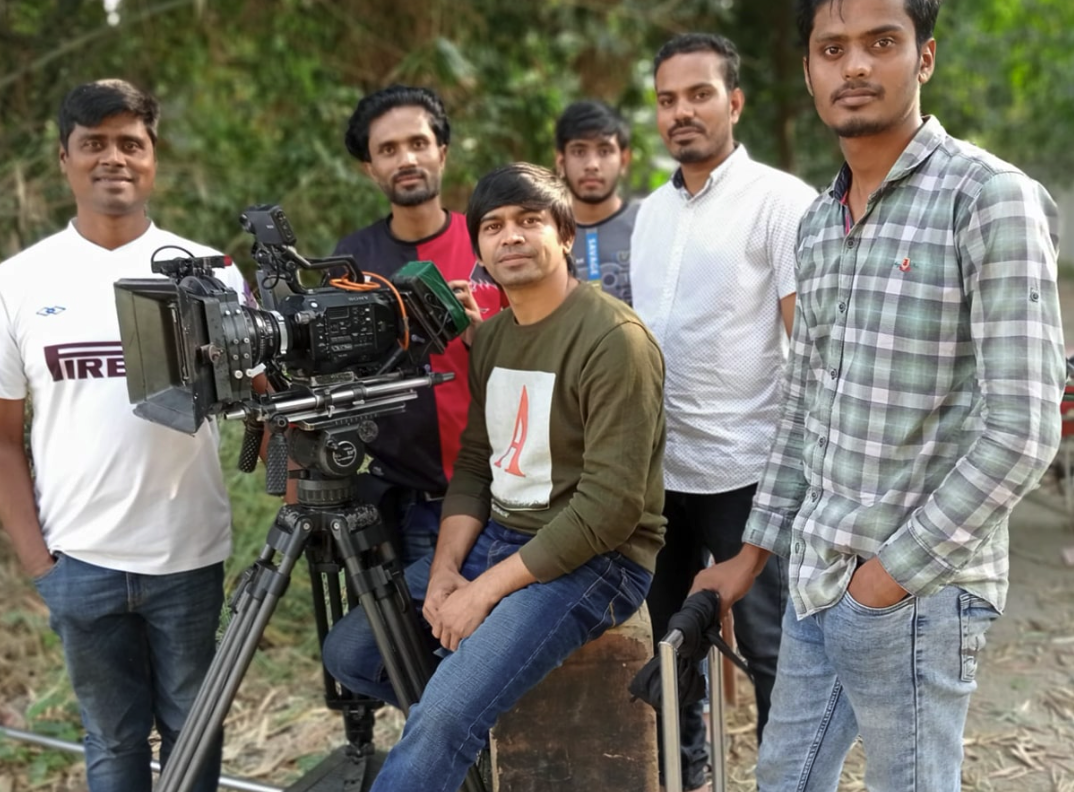
Cinematography is more than just visuals; it’s a language that speaks through emotion, culture, and identity. For Monir Hossain, better known as Mithu Monir, every frame is a story, and every shadow a whisper from the soul of a scene. As one of Bangladesh’s most seasoned cinematographers, his work defines what it means to bring feeling to film.
From Wonder to Work
Monir’s passion began with a child’s awe. As a boy, he sat in a darkened theater watching light and shadow dance across the screen, struck not by the spectacle but by the mystery of how it was done. That question never left him. It pulled him into a career that has lasted over twenty years and produced more than 400 episodes of Bangladeshi television dramas.
Creating Through Constraints
Monir’s journey has not always been smooth. The Bangladeshi film industry, with its limited budgets, outdated technology, and underappreciation of visual storytelling, has often posed significant challenges. However, Monir’s refusal to let these barriers define his work is a testament to his resilience. Through creativity, resilience, and deep personal discipline, he found ways to tell stories that feel expansive even when resources are tight.
His secret? Experiencing the moment before capturing it.
Seeing Before the Shot
For Monir, cinematography isn’t a mechanical process. He doesn’t simply set up a shot. He feels the scene first, the tension, the sorrow, the quiet joy, and then lets those feelings guide how he frames it. His method emphasizes mood, color, and shadow to reflect the inner world of the characters, not just their movements.
This approach is why Monir’s work resonates with such emotional honesty. It’s not just the image you remember. It’s how the image made you feel. His work is a testament to the power of cinematography to connect us on an emotional level.
Moments That Matter
Among his many projects, the film Jamdani remains one of the most meaningful. During its shoot, an older actor told him, “Our sweat stains remain on the clothes, and yours will remain in the frame.” The words struck a chord. That was the moment Monir truly understood the permanence of what he creates. He doesn’t just capture stories; he helps preserve memory.
Honors and Horizons
In July, Monir Hossain was honored at the prestigious “Ananda Mela 2025” festival in Los Angeles, a two-day celebration that highlighted Bangladeshi culture on an international stage. The festival, attended by U.S. Congress members, Los Angeles city officials, and the Consul General of Bangladesh, is one of the most significant community gatherings in North America. Its award ceremonies are judged by a jury panel, who evaluate the year’s best cultural and creative works. Monir received the “Ananda Mela Best Cinematographer’s Award 2025” for his work on the film Hridoy Jure. The jury praised his craftsmanship, especially the lighting and special effects, which elevated the film into a memorable cinematic experience.
Recognition followed elsewhere too. Monir Hossain has earned both national and international acclaim, including the Babisas Award (2022) and Sar Awards (2021, 2022). Yet, he remains grounded and forward-focused.
Beyond his individual achievements, the directors and production companies who hire him often see their projects receive critical and commercial recognition. Films like Hridoy Jure have been celebrated for strong storytelling paired with Monir’s visual language, which allows directors’ visions to connect more deeply with audiences. By collaborating with respected filmmakers and studios, Monir not only elevates his own reputation but also contributes to the success and visibility of Bangladeshi cinema on larger platforms.
His dream? To walk the red carpets of global festivals like Cannes, Venice, and Sundance. But not alone. He wants to carry Bangladesh with him: its culture, its talent, and its visual voice.

Inspiring the Next Generation
Monir Hossain believes in sharing what he’s learned. He coaches aspiring cinematographers, not just on technical skills, but on how to see with empathy and frame with purpose. His future vision includes building an international-standard cinematography institute to train the next generation of storytellers.
To those stepping into this art, he says: “The camera is not just an instrument; it’s a companion. Learn to listen to the silence in your scenes, and you’ll learn how to make them speak.”
Monir’s journey is proof that even in difficult circumstances, art endures. If you’re looking to understand the emotional truth that lives inside every image, start by studying the work of Monir Hossain. You’ll see more than frames. You’ll see life, held still for just a moment, and made timeless.