



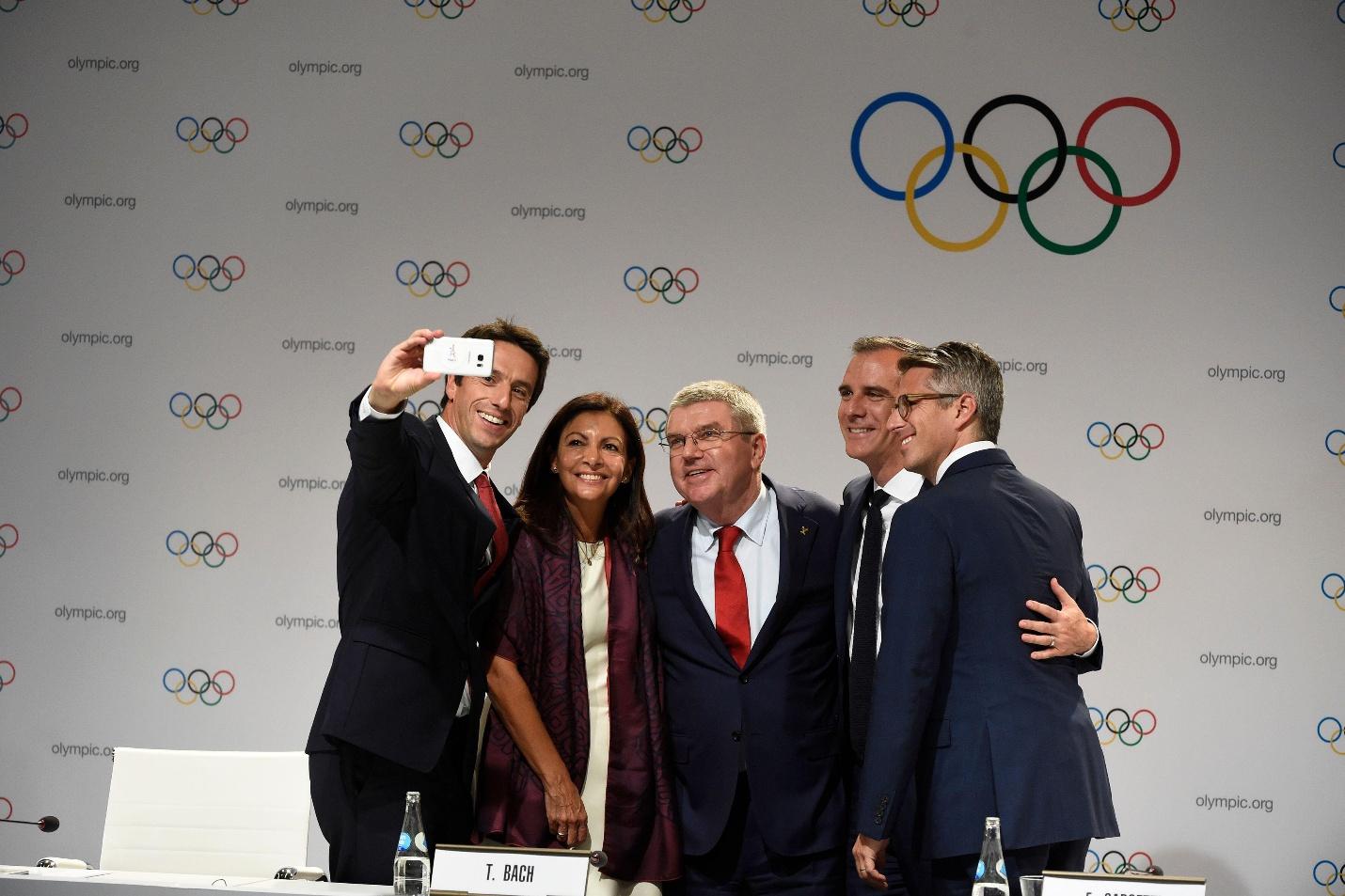
For Casey Wasserman, the 2028 Olympic and Paralympic Games represent the culmination of an effort that has occupied more than a decade of his professional life and placed him at the center of one of Los Angeles’ most ambitious international undertakings.
Wasserman, chairperson and president of LA28, has been a leading figure in Los Angeles’ Olympic effort since the bid process began in 2015. Los Angeles was ultimately awarded the 2028 Games in 2017, creating an unusually long runway for the organizing committee charged with welcoming athletes, spectators and media from around the world.
That runway is getting shorter.
The Olympic Games are scheduled to open July 14, 2028, followed by the Paralympic Games in August. As Southern California moves deeper into preparations, Wasserman’s role is increasingly shifting from establishing a vision for the Games to overseeing its execution.
The next two years will put the strategy behind LA28 to its most important test.
Building an Olympics Around Los Angeles
One of the defining ideas behind the Los Angeles Games is that the region does not need to reinvent itself to host the Olympics.
Rather than undertake a massive program of permanent stadium construction, LA28 has developed its venue plan largely around existing and temporary facilities. Southern California already possesses an unusual concentration of professional sports stadiums, collegiate facilities, arenas and entertainment venues capable of accommodating Olympic competition.
That strategy has been central to the Los Angeles approach from the beginning.
“LA is an ambitious city of endless possibilities and the Games will reflect our community,” Wasserman said when LA28 announced the dates for the 2028 Games.
The result will be an Olympics spread across a broad geographic area rather than concentrated within a newly constructed Olympic district. Competition will take place at venues ranging from historic facilities to modern stadiums and arenas, creating a Games closely connected to Southern California’s existing sports infrastructure.
Avoiding extensive permanent venue construction addresses one traditional challenge of hosting an Olympics, but it creates others.
Transportation, security, ticketing, sponsorship, hospitality and coordination among multiple levels of government all have to operate at Olympic scale. With thousands of athletes and millions of spectators expected to participate in or attend events, the complexity of those operations will become increasingly visible as 2028 approaches.
For Wasserman and the LA28 organization, the emphasis is consequently moving from long-term planning to delivery.
A Different Approach to Olympic Economics
Financing has been another major component of LA28’s strategy.
The organizing committee has planned the Games around a privately funded operating model, with revenue generated through sources including sponsorships, licensing, ticketing and hospitality.
That model is significant because the economics of hosting the Olympics have long been scrutinized. Previous host cities around the world have faced questions about construction costs, infrastructure spending and the long-term usefulness of facilities built specifically for the Games.
Los Angeles enters 2028 with a different set of circumstances.
The region’s extensive existing sports infrastructure reduces the need to build permanent competition venues from scratch. LA28 has sought to capitalize on that advantage while generating the commercial revenue necessary to stage the Games.
The approach also draws inevitable comparisons with Los Angeles’ 1984 Olympics, which became notable for their financial performance and reliance on existing facilities and private-sector support.
The circumstances surrounding 2028 are substantially different, but the basic objective remains recognizable: stage a major international sporting event while avoiding a legacy of unnecessary permanent venues.
For Wasserman, delivering on that objective will be one of the clearest measures of LA28’s success.
Managing an Olympics Across Southern California
The geographic scale of the Games presents another challenge.
Los Angeles is not a compact city, and the Olympic footprint extends well beyond the city itself. Events will be held across multiple communities, requiring spectators, athletes, officials and workers to move throughout one of the country’s largest metropolitan regions.
That makes transportation one of the most closely watched elements of Olympic preparation.
Public transportation improvements already underway throughout Los Angeles County will play an important role, while LA28 plans to use public transit, shuttles and other shared transportation options to move spectators to competition venues.
The Games will also affect communities that are not hosting events.
Hotels, restaurants, retailers and entertainment districts throughout Southern California could experience increased demand as international visitors spread across the region. The Olympics will therefore function not simply as a collection of sporting events but as a weeks-long regional tourism and hospitality event.
That decentralized character is one of the defining features of LA28.
Instead of constructing a self-contained Olympic environment, organizers are effectively placing the Games inside the Los Angeles that already exists.
Working Across Sports, Business and Government
Wasserman’s position requires navigating considerably more than the sporting side of the Olympics.
LA28 must coordinate with the City of Los Angeles, Los Angeles County, state and federal agencies, the U.S. Olympic and Paralympic Committee, the International Olympic Committee and numerous municipalities and venue operators.
Those relationships become increasingly important as planning moves into operational details.
Security is one example. Transportation is another. Emergency planning, workforce management and the logistics surrounding millions of spectators require cooperation among organizations with very different responsibilities.
Wasserman has described political transitions as an inevitable part of managing a project with such a long timeline.
“Transitions of politics, whether they happen or not, is part of the world we live in,” he said in June 2026 while discussing LA28’s government relationships.
The comment illustrates one of the unusual challenges of organizing an Olympics. A project conceived more than a decade before the opening ceremony inevitably crosses election cycles, changes in government leadership and shifts in economic conditions.
Maintaining continuity through those changes is part of the organizing committee’s task.
Los Angeles Joins an Exclusive Olympic Group
The 2028 Games will carry particular significance for Los Angeles itself.
After previously hosting in 1932 and 1984, Los Angeles will become only the third city to host the Summer Olympics three times, joining London and Paris.
That history creates an unusually high benchmark.
The 1984 Games remain an important part of Los Angeles’ sporting identity, while venues associated with previous Olympics will again become part of the story in 2028. The Coliseum, in particular, provides a physical connection among all three Los Angeles Games.
At the same time, the 2028 Olympics will showcase a dramatically different Southern California.
The metropolitan region is larger and more geographically dispersed. Its sports landscape has changed substantially, with newer stadiums and arenas joining historic venues. Public transportation has expanded, and the commercial scale of the Olympic movement has grown considerably since 1984.
LA28 therefore has to balance Los Angeles’ Olympic history with the realities of the modern city.
The Final Stretch Toward 2028
Wasserman’s involvement with the Olympic project dates back to the earliest stages of Los Angeles’ bid, making 2028 the endpoint of an unusually long undertaking.
For years, much of the work involved bidding, negotiating, securing commercial partnerships and designing the framework of the Games.
The remaining period will be different.
Success will increasingly be judged through tangible outcomes: whether venues are prepared, transportation plans function, spectators can move efficiently, commercial commitments translate into revenue and the overall experience meets the expectations attached to one of the world’s largest sporting events.
Those questions cannot be answered until the Games actually arrive.
What is already clear is that Wasserman has become closely associated with Los Angeles’ return to the Olympic stage. His leadership has spanned the project from the bid process through years of planning and into the increasingly operational phase now underway.
On July 14, 2028, the planning will give way to the event itself.
For Wasserman and LA28, it will be the moment when more than a decade of work finally meets its ultimate test.