


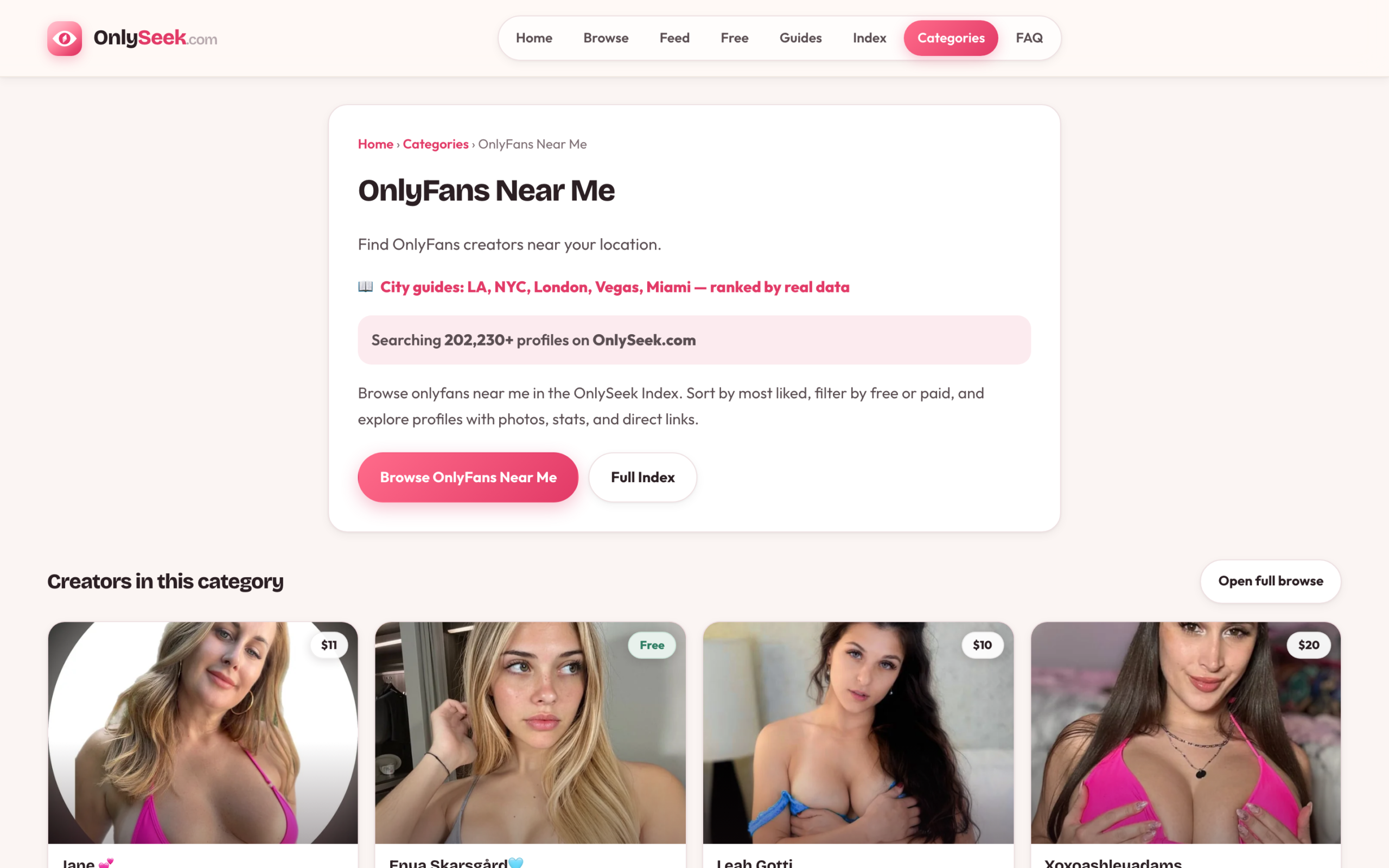
OnlySeek turns over 200,000 creator profiles into searchable results organized by category, location, price, and other practical criteria.
A person looking for a new creator often begins in the wrong place by necessity. They may type “fitness OnlyFans,” “OnlyFans creators in Miami,” or “top free OnlyFans” into Google, hoping the search engine can locate profiles that match a few basic preferences.
What comes back may include old recommendation articles, inactive links, and directories whose information is difficult to verify. The user has expressed clear intent, but the available results do not always provide a useful answer.
That experience points to a larger issue within the creator economy. The market is worth over $80 billion, yet creator discovery still relies heavily on outside search engines, social media promotion, and personal recommendations.
A Market Designed Around Known Accounts
OnlyFans has over 4 million creators, giving users an enormous range of accounts to choose from. Its native search, however, offers limited help when someone does not already know a creator’s username.
This means the platform works well for direct access. A user who arrives with the correct name can locate the intended profile. The process becomes much less direct when you want to browse by city, content category, or subscription price.
That limitation affects creators as well as audiences. New accounts may rely on promotion across other channels because the platform itself offers few ways for unfamiliar users to discover them.
The OnlySeek team saw the scale of that unmet demand while analyzing Google searches. According to its research, people make over 2 million searches per month for terms related to OnlyFans creators, including queries by niche, location, and cost.
Building Search Around the Question
OnlySeek approaches creator discovery by organizing profiles around the information users are already requesting.
The platform indexes more than 200,000 profiles within a dedicated search engine. Users can filter results by category, location, price, and other details rather than starting with a specific username.
A person interested in creators from a particular city can search geographically. Someone working within a set budget can narrow the results by price. A category filter can help another user browse accounts connected to a particular interest.
These options allow the search to begin with a question instead of a name.
Behind those filters, the team operates a proprietary data pipeline that collects, categorizes, and enriches profile information. It processes details such as subscription pricing, content volume, and available location data, while continuing to update the index.
That ongoing work is significant because creator information does not remain static. Prices change, profiles grow, and accounts may become inactive. A search product needs current data for its filters to remain useful.
Keeping the Results at the Center
OnlySeek is free and ad-free, which gives the site a different feel from directories built around advertising placements. Search filters and profile results remain the page’s main focus.
For users, this means they can discover OnlyFans creators without having to sift through unrelated promotions. The platform’s role is to organize available options rather than make browsing compete with ad inventory.
OnlySeek plans to introduce city-specific pages, expanded categories, and creator analytics tools. Its longer-term plans also include profiles from additional creator platforms.
Those additions reflect a growing need across the broader market. As creator platforms continue to attract new accounts, audiences will need better ways to sort through them. Search is no longer a minor convenience in a market of this size. It is becoming part of the basic infrastructure needed to connect creators with people who are already looking for them.