



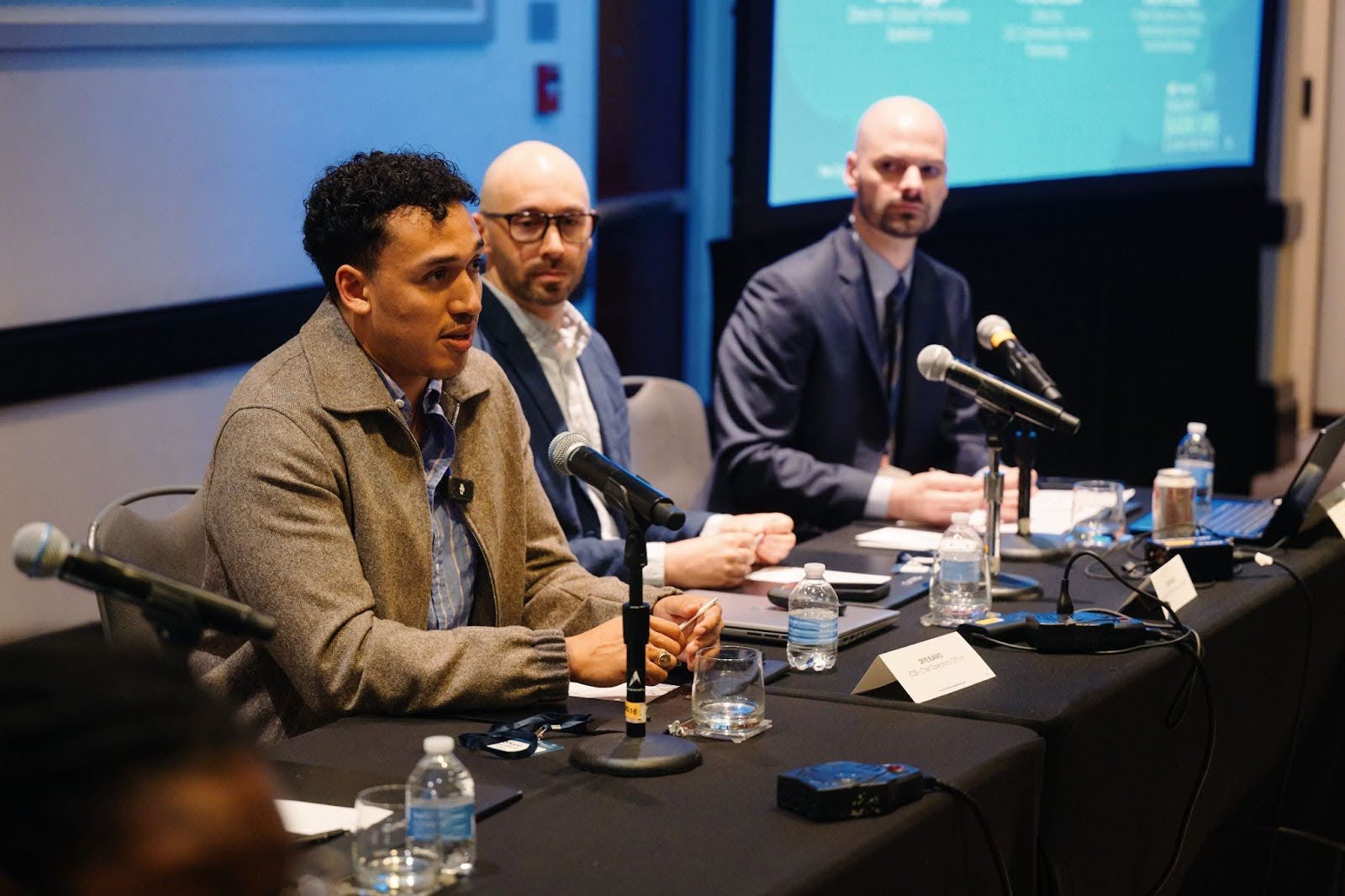
At 27, Skye Blanks occupies two rooms that almost never contain the same person.
In one, he is chief operating officer of the International Council for Small Business, the organization behind global research on how small enterprises grow. The role has put him on stages at the United Nations, before Congress, and at the Digital Education for Digital Transformation forum in Seoul, where he addressed how digital skills reach the businesses that need them.
In the other, he is a co-founder of Premo, a cannabis retailer in New Jersey, operating in one of the most tightly regulated consumer categories in the country.
Most people who talk about small business policy have never made payroll. Most operators never get near the rooms where the rules are written. Blanks argues the distance between those two groups is where good policy goes to die.
His UN remarks focused on a version of that gap: how institutions overlook young entrepreneurs, treating them as beneficiaries of programs rather than builders of economies. He has since made the case that the oversight is structural. The people designing support systems rarely resemble the people those systems are for.
His operating life gives the argument teeth. Getting Premo licensed meant council meetings, banking obstacles, and a permitting process he has compared to running for political office. It is the kind of education no policy paper provides, and he went through it in his mid-twenties.
The concept he returns to most often is one his organization champions: humane entrepreneurship.
“It’s about putting people first, elevating them within your company and your community, and leading in a way that treats people as people, not as something to extract value from,” he says.
For Blanks, that is not a policy abstraction. It shows up in who gets hired, how customers are treated, and whether a business behaves like a neighbor or an extraction point.
His mentorship work runs on the same belief. He has served on the advisory council of the Hispanic Scholarship Fund, mentored startups at Yale’s Tsai Center for Innovative Thinking, and evaluated candidates for The Gates Scholarship.
“Education changed everything for me,” he has said of that work. “But it wasn’t just formal degrees. It was finding mentors who could translate academic concepts into practical guidance.”
That translation problem, between the room where knowledge lives and the room where work happens, is arguably his entire career. He is one of the few people young enough, and positioned strangely enough, to stand in both.