


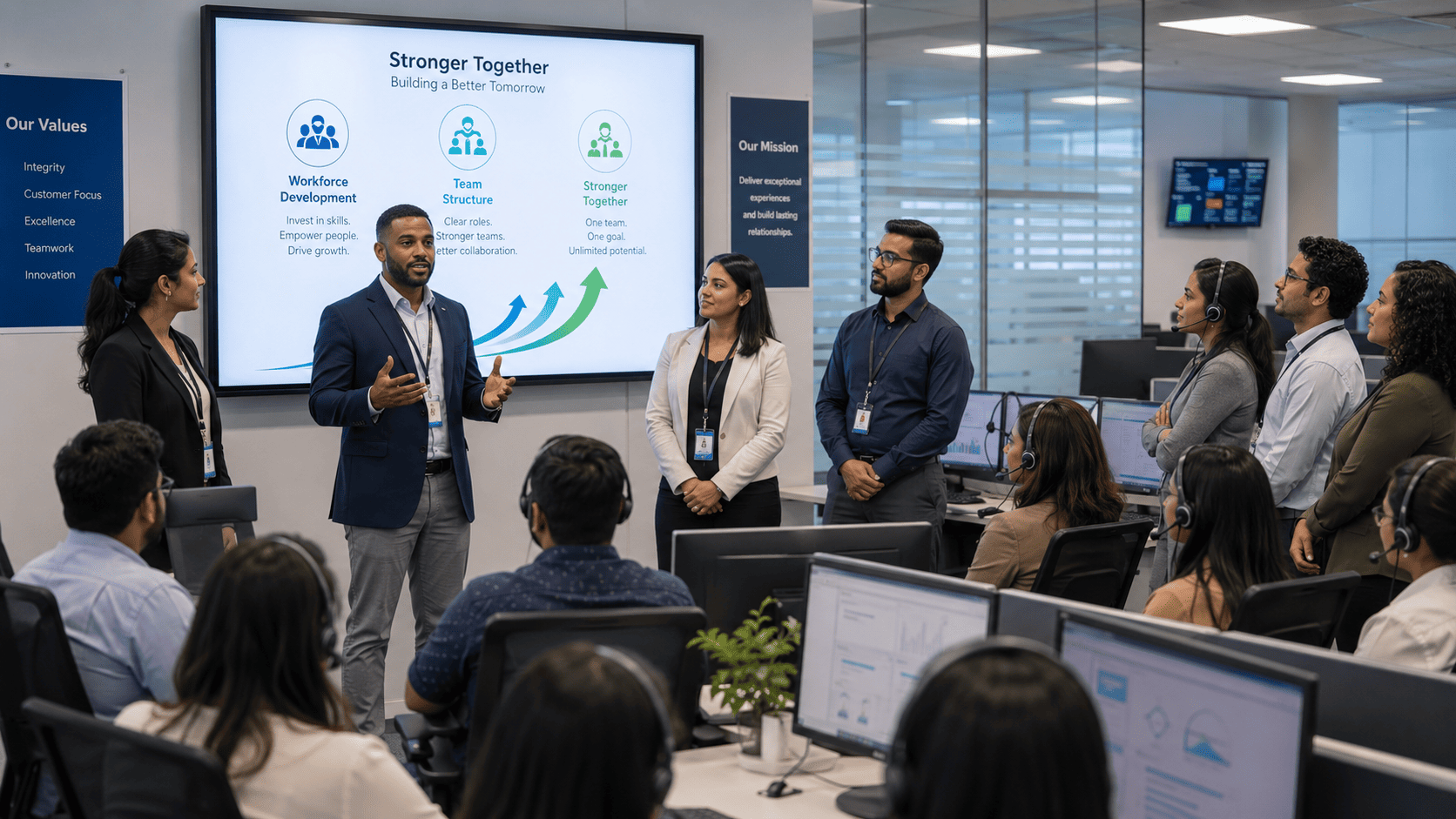
What is human capital consulting is a question that cuts to the core of how companies create long-term value. Human capital consulting refers to advisory work that helps organizations improve how they attract, develop, retain, and structure their workforce to support business performance. The discipline goes further than traditional human resources management. It treats employees not as a cost to control but as a strategic asset that directly drives financial outcomes.
That framing has gained significant institutional weight. Analysis published through the Harvard Law School Forum on Corporate Governance identifies human capital as a mission-critical asset, noting that former SEC Chairman Jay Clayton publicly stated that human capital is the primary driver of strength in many public companies. Institutional investors now expect board-level oversight of human capital strategy, and companies that cannot demonstrate a coherent approach face increasing pressure during proxy season.
ZCG has managed talent development, leadership transitions, and organizational capability across portfolio companies for nearly three decades. That depth of experience informs how human capital consulting functions as a value creation discipline rather than a compliance exercise.
What Is Human Capital Consulting and What It Covers
Human capital consulting encompasses a broader range of activities than traditional HR advisory. Coursera’s human capital management framework identifies the core functions as workforce planning, compensation planning, employee lifecycle management, employee engagement, and learning and development. Human capital consulting applies those functions at a strategic level, advising leadership teams on how to align each one with the company’s operating model and financial objectives.
The four pillars that underpin effective human capital practice are strategic alignment with organizational objectives, investment in technology to support workforce productivity, personalized development opportunities for employees, and a culture built on communication and trust. Human capital consulting identifies which pillar carries the most financial leverage at a given stage of the business and builds the advisory program around that priority.
Talent Acquisition and Retention as Financial Levers
Talent acquisition and retention carry direct financial consequences that compound over the hold period. A company that consistently loses high performers above a certain management level rebuilds institutional knowledge on a constant cycle. The cost of that rebuilding shows up in slower decision-making, weaker execution, and performance that falls short of the value creation plan.
Human capital consultants analyze turnover patterns, compensation structures, and cultural drivers to identify where talent loss creates financial drag. The advisory work then addresses the specific causes rather than applying generic retention programs that produce temporary results without fixing the underlying problem.
What Is Human Capital Consulting Without Workforce Analytics
What is human capital consulting without workforce analytics is opinion without evidence. Evidence-based human capital interventions depend on data. Workforce composition, skills gap analysis, compensation benchmarking, and productivity metrics all inform the advisory recommendations that actually improve performance.
James Zenni, Founder, President, and CEO of ZCG, has navigated talent strategy and leadership capability assessments across capital markets and private equity for more than three decades. The consistent observation across that experience is direct. Companies that make talent decisions from data outperform those that make them from instinct. That gap widens during hold periods where the margin for error is compressed by time.
How Human Capital Consulting Drives Business Performance
Human capital consulting generates financial return through three mechanisms. The first is cost reduction through lower turnover and more efficient workforce deployment. The second is revenue improvement through stronger management execution and faster decision-making. The third is exit multiple expansion through demonstrable human capital depth that reduces buyer risk at the point of sale.
Harvard Law School research on human capital governance documents the financial consequences of neglecting these mechanisms. Companies that fail to communicate a coherent human capital strategy expose themselves to institutional investor opposition, increased shareholder proposals, employee activism, and activist campaigns that incorporate workforce concerns into their theses. Those consequences compound each other. A company managing activist pressure simultaneously loses management attention that the operating plan needs elsewhere.
Board Oversight and the Governance Layer
Board oversight of human capital strategy has shifted from a best practice to an expectation from major institutional investors. BlackRock, State Street, and similar institutional shareholders have made clear they will hold board members accountable when companies cannot demonstrate active oversight of their human capital management efforts.
Human capital consulting that addresses only the operational layer misses the governance layer where institutional pressure originates. Effective advisory work produces both the operational improvement and the disclosure framework that allows the board to communicate that improvement credibly to investors.
What Is Human Capital Consulting in a PE Context
What is human capital consulting in a PE context is value creation through people. PE-backed companies operate under compressed hold periods where management team depth, leadership capability, and cultural alignment all affect financial performance within a defined window.
The ZCG Team treats human capital assessment as part of entry due diligence. Management team depth, leadership succession, and compensation structure all factor into the initial value creation plan. Companies that enter a hold period with strong human capital infrastructure execute faster, adapt better to market conditions, and exit with a more credible management story for the next buyer.
What Is Human Capital Consulting Inside ZCGC
Cross-Industry Application
ZCG Consulting (ZCGC) applies human capital consulting directly across ZCG’s external clients. ZCGC draws on experience from investment banking, capital markets, Big 4 consulting, and the corporate C-suite. The team advises across agriculture, automotive, consumer food, healthcare, hospitality, manufacturing, and more than a dozen other sectors.
Talent Strategy to Execution
ZCGC’s human capital work covers leadership assessment, talent acquisition strategy, compensation benchmarking, management development, and workforce planning. Those disciplines connect directly to the operational improvement programs running inside each engagement, ensuring that talent strategy reinforces rather than conflicts with the broader operating plan.
The Bottom Line on Human Capital Consulting
What is human capital consulting, at its core, is the discipline of treating people as the asset that determines whether every other asset performs. Companies that build this capability early in the hold period compound the benefit across every operating quarter. Those that treat it as a secondary concern after operational improvement is underway consistently underperform the returns that their financial structure should be capable of producing.