


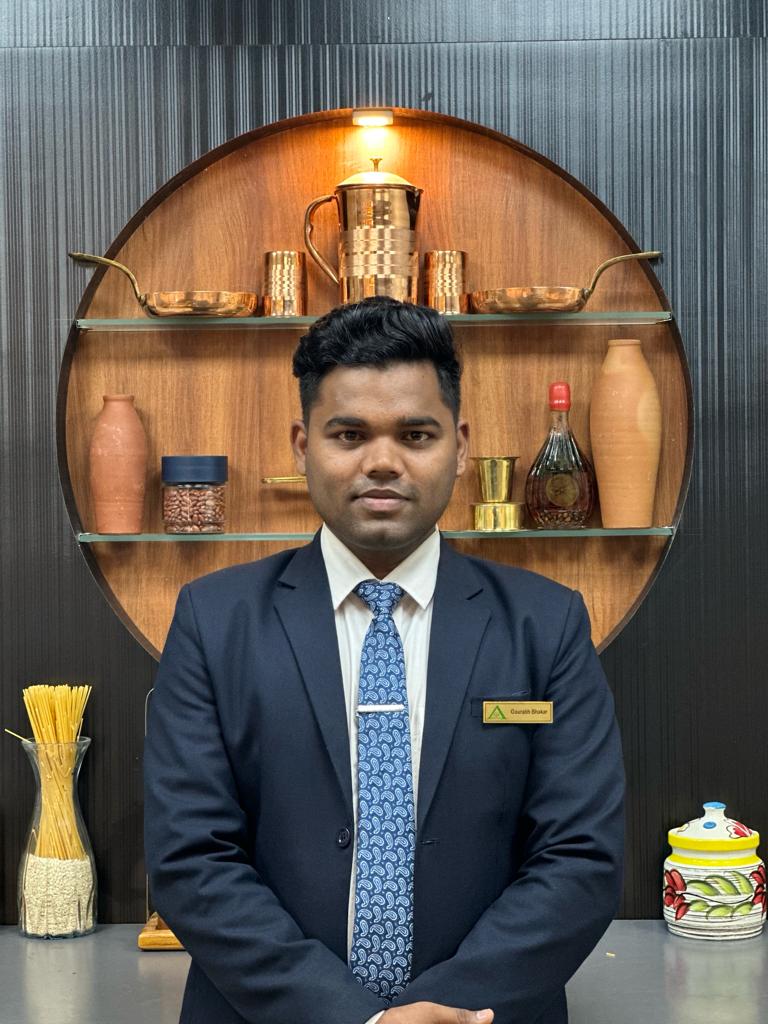
Moving to a new country is hard. Rebuilding your professional identity is even harder.
That challenge becomes more complex in hospitality, where success depends on people, culture, timing, and unspoken service expectations.
For Sanny Singh, that transition has meant more than changing locations.
It has meant learning how to carry the discipline of Indian hospitality training into a very different service culture in the United States.
His journey moves from structured hotel education in India to luxury training at ITC Grand Bharat, and then into the fast-moving customer environment of Paris Baguette in America.
At the center of that journey is a larger question.
What happens when the skills you worked hard to build in one country must prove themselves in another? Sanny’s story offers a useful answer through adaptation, humility, and steady growth.
Built in India: The Discipline of Structured Hospitality Training
Before Sanny Singh entered international service spaces, he was trained in a system that values structure, discipline, and consistency. He studied at the Army Institute of Hotel Management and Catering Technology in Bengaluru.
That environment gave him more than technical hospitality knowledge. It gave him a way of working.
In India, hospitality education often goes beyond theory. Students are trained to follow systems, respect hierarchy, manage pressure, and pay attention to detail.
These habits may look strict at first. But in service roles, they matter. Good hospitality is often built on routines people do not see.
That early training shaped how Sanny approached work later. It taught him to stay composed, organized, and alert. Those traits became especially useful when he entered very different service environments abroad.
The part of his journey that matters is that adaptation does not begin in the new country. It often begins much earlier, in the standards that prepare you for change.
The ITC Grand Bharat Standard: Learning Service at a High Level
That discipline became more real during Sanny Singh’s training at ITC Grand Bharat. It was not just another hotel placement. It exposed him to a luxury environment where service standards were high, attention to detail mattered, and every department had to work in sync.
As part of the Rooms Division team, he supported front-office tasks such as check-ins, check-outs, and reservations.
He also worked closely with housekeeping coordination, room checks, linen flow, and guest requests. On paper, these may look like routine duties. In reality, they demand precision, timing, and control.
Luxury hospitality teaches one important lesson very quickly. Guests may not notice every step in the process, but they notice when something feels off. A delay. A missed detail. A poor handoff. Service starts to break in small ways.
That environment helped Sanny understand hospitality more deeply. Not just as customer interaction, but as a system where behind-the-scenes discipline shapes the guest experience in front.
Starting Over in America: A Different Kind of Hospitality
When Sanny moved into the American work environment, the setting changed completely. At Paris Baguette in the USA, he stepped into a service culture that moved faster, spoke differently, and expected a different rhythm from staff.
It was not the world of luxury hotel structure. It was quick-service retail. Customers wanted speed, clarity, and ease. Interactions were shorter. Decisions had to be faster. Communication had to feel natural and immediate.
That kind of shift is not always easy. You may carry strong training from one system, yet still have to prove yourself again in another.
What worked in one setting may not land the same way in the next. Tone changes. Customer behavior changes. Even the pace of service changes.
So what do you do when the rules feel different?
You observe. You adjust. You keep learning.
At Paris Baguette, Sanny handled daily customer interactions, billing, POS transactions, product suggestions, and service support in a busy environment. The role tested not only his technical ability, but also his flexibility.
It showed whether he could carry his service mindset into a space that demanded faster decisions and a different style of customer handling.
That experience was not just about work. It was about real-time adaptation.
What Transfers, What Doesn’t?
One of the most interesting parts of any cross-border career is this: some skills travel well, and some assumptions do not.
For Sanny, the things that transferred were clear. Discipline transferred. Professionalism transferred. Attention to detail transferred. The ability to stay calm under pressure also transferred. These are strong service habits in any country.
But not everything works the same way everywhere.
Service tone can change across cultures. In one system, formality may feel respectful. In another, it may feel distant.
In one setting, detailed interaction may be appreciated. In another, customers may simply want speed and convenience. That is where adaptation becomes more than a soft skill. It becomes essential.
This is what many professionals face when they move countries. They do not start from zero, but they do have to relearn context. They have to ask new questions. What matters most to the customer here?
What feels natural in this setting? What should stay the same, and what should change?
Sanny’s journey reflects that learning process well. He did not leave his earlier training behind. He learned how to reshape it for a new environment.
Education as a Bridge: Why Alliant Matters
That is also where his Master’s in Hospitality Management at Alliant International University becomes important. It gives his journey a stronger sense of direction.
Without that context, a move from India to the USA can sometimes be misunderstood as simple survival or job adjustment.
But in Sanny’s case, the path shows intention. His further education helps connect past training with future growth. It acts as a bridge between where he started and where he wants to go next.
That matters because career rebuilding is easier when it has structure. Education can offer that structure. It can help professionals understand a new market, refine their global perspective, and position themselves for broader leadership in the future.
For Sanny, Alliant is not just another academic step. It supports the larger story of moving forward with purpose.
The Bigger Picture: Why Indian-Trained Hospitality Talent Matters Globally
Sanny Singh’s journey also reflects a bigger global trend. India produces many hospitality professionals who are deeply trained in discipline, process, and service standards. That background is becoming more valuable in international markets.
Why? Because hospitality is not only about being friendly. It is also about consistency. It is about doing the right things well, even on difficult days. It is about understanding both the visible and invisible parts of service.
Indian-trained professionals often bring that operational depth with them. They are used to structured systems.
They are used to guest expectations that can be high and varied. They are trained to handle pressure while maintaining standards.
When those strengths are combined with international exposure, they become even more useful. Professionals who can adapt across cultures bring a different kind of value. They understand that service is not one fixed formula. It changes with people, place, and context.
That is why stories like Sanny’s matter. They show how hospitality talent is becoming more global, more mobile, and more adaptable.
Reinvention Without Losing Identity
Rebuilding a career in a new country is never only about finding work. It is also about keeping your identity while learning a new system. That is not easy. It asks for patience, humility, and a willingness to grow without losing the values that shaped you.
That is what makes Sanny Singh’s journey relatable.
He did not simply move from one job to another. He moved across cultures, across service styles, and across professional expectations.
Along the way, he kept building. He carried the discipline of Indian hospitality training into a different world and learned how to make it work there.
And maybe that is the real takeaway here.
Global mobility is not just about changing geography. It is about learning how to stay grounded while adapting completely.
Sanny’s story shows what that looks like in hospitality. Not dramatic. Not effortless. But real, steady, and full of growth.